
No. 76:Ms. Ma Xiaowan (Nanjing Normal University, completed AELC in November, 2025)
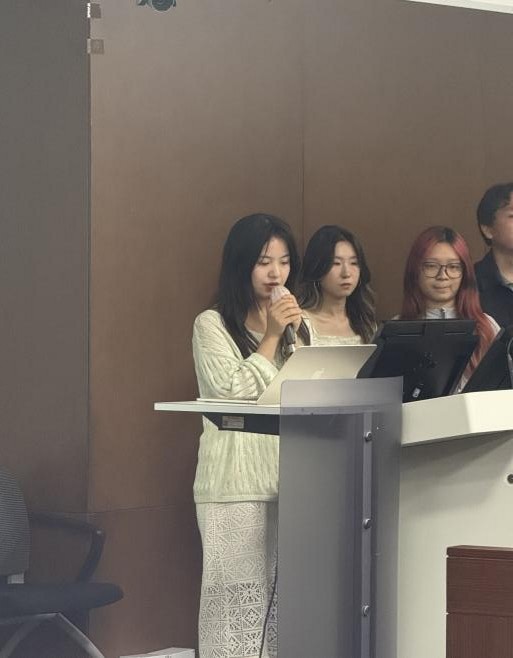
Life Is Vaster Than “Usefulness”
I am Ma Xiaowan from the School of Educational Science at Nanjing Normal University. It has been a great pleasure to participate in the AELC program, a journey that profoundly reshaped my understanding of research and education, and revealed a truth that resonates deeply: life is far vaster than mere "usefulness."
This revelation began in our quantitative research course. Our professor, with the humor of a stand-up comedian, guided us through rigorous data logic. We extracted numbers from international databases, running correlations and regressions, much like searching for a single, calibrated feather in a vast ocean. I came to see that data are not cold symbols but silent witnesses, narrating the stories of thousands of children—how they learn, grow, and are shaped by education. I grew fascinated by creating order from chaos; it was a precise treasure hunt where a significant coefficient flashing on the screen felt like an "aha" moment of catching truth mid-air.
In stark contrast, qualitative research was a different, more ambiguous endeavor. It required patience, like developing a photo in a darkroom—the image of understanding emerged gradually, resisting any force or haste. Together, these methods mirrored two states of life: the quantifiable logic of existence and the intricate, unmeasurable complexities of human stories. They taught me that true insight requires both precision and empathetic breadth.
This epistemological shift extended beyond methodology. A classmate from Taiwan shared their education system—subjects like "National Language" and "Integrated Studies" represented entirely different educational philosophies. I realized that "schooling" can take myriad forms, and that concepts like performance and advancement are culturally constructed. This exposure to diverse "educational wrinkles" across systems was humbling and enlightening.
These experiences coalesced around a central question: "What's the use of learning this?" This pervasive inquiry feels like a saw, cutting away at our expressive wildness and poetic sense of life. Yet, I firmly believe that education's ultimate purpose is to help us become better selves. In an age obsessed with instrumental rationality, the so-called "useless" humanities are crucial. They may not change the world directly, but they guard humanity's essential embers during civilization's coldest nights. The real crisis is not technology's strength, but human weakness—our tendency to abandon narrative power and let efficiency dictate life's depth.
The AELC program, therefore, gave me not just specific skills, but a new state of being: a blend of resolve and caution, a mind both passionate and critical. It allowed me to find meaning in data, understand others across boundaries, and ultimately, touch the essence of education itself.