
No. 78:Ms. Han Xinhui (Korea University, completed AELC in November, 2025)
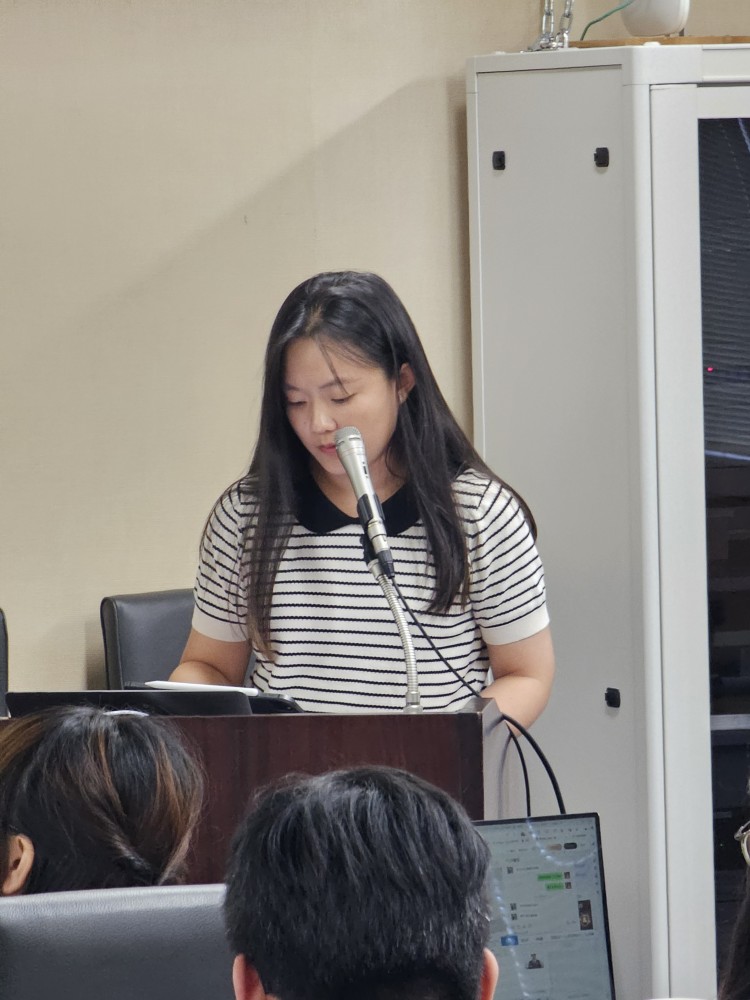
Reflection on Participating in the Asia Education Leader (AEL) Course
Participating in the Asia Education Leader (AEL) Course was a transformative experience that deepened my understanding of educational issues in East Asia and expanded my capacity as an internationally minded educational professional. The program’s core mission—to nurture comparative researchers, teacher leaders, and education administrators with regional perspectives—resonated strongly with my own academic and professional aspirations.
One of the most meaningful aspects of the course was the opportunity to learn from faculty and peers across the six partner institutes in Japan, Taiwan, China, and Korea. Engaging with scholars from Tohoku University, National Chengchi University, Nanjing Normal University, Korea University, and National Taiwan Normal University helped me understand how shared regional challenges—such as demographic shifts, educational inequality, and technological change—manifest differently depending on historical, cultural, and policy contexts. These exchanges strengthened my ability to approach issues through a comparative lens rather than relying solely on national assumptions.
Through lectures, discussions, and collaborative group projects, I gained valuable insight into how educational research and practice can be bridged. Listening to teacher leaders and policymakers share real cases encouraged me to think practically about how research evidence can inform classroom practice, and how practitioners’ voices can, in turn, shape more grounded research questions. This reciprocal relationship between theory and practice was one of the most impactful lessons of the course.
Another important takeaway was the emphasis on cross-cultural communication and regional collaboration. Working closely with participants from diverse backgrounds highlighted both the complexity and the necessity of partnering across borders to address educational challenges that no single country can solve alone. The rotational structure of the AEL Course—hosted by different universities each session—also demonstrated the value of shared ownership and mutual respect within regional networks.
Ultimately, the AEL Course strengthened not only my comparative research skills but also my sense of responsibility as an emerging educational professional in East Asia. It reminded me that developing solutions to contemporary challenges requires openness, collaboration, and an international mindset grounded in local realities. I leave the program with renewed motivation to contribute to educational improvement in the region and with lasting relationships that will continue to influence my academic and professional journey.