
No. 88:Ms. Yeonwoo Lee (Korea University, completed AELC in March, 2026)
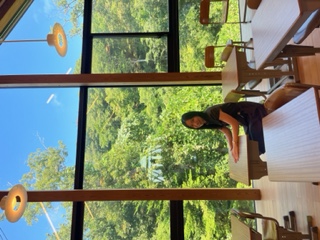
Hello everyone, My name is Yeonwoo Lee, and I am a master’s student in Educational Administration and Higher Education at Korea University. My participation in the AELC has been one of the most formative experiences throughout my master’s journey. I first joined the program in my first semester and participated three times—at Tohoku University (Summer 2024), Korea University (Summer 2025), and in a joint program with National Taiwan Normal University and Tohoku University (Winter 2026). Now, as I approach my final (fifth) semester, it is a great honor to complete the AELC, marking a meaningful milestone in both my academic and personal development.
The most valuable aspect of AELC was the people. For intensive days in AELC, I was surrounded by peers who shared a deep interest in educational issues across different national contexts. What made this experience particularly powerful was the constant presence of students from various countries who could vividly explain their own educational systems and challenges. This environment encouraged me to continuously ask questions, identify both commonalities and differences across countries, and refine my own position on key educational issues.
Beyond the classroom, informal conversations with peers significantly deepened my understanding of higher education in Asia. From the perspective of higher education, I learned that the educational environment varies greatly across countries, shaping students’ attitudes toward university life and career choices. In Japan, university experiences tend to be valued more than specific majors, and job-related training is often provided after employment. In contrast, in China, academic degrees—especially master’s degrees or higher—are essential for accessing certain positions. In Korea, there is a strong emphasis on major-specific expertise, and employers tend to seek “qualified” candidates with specialized skills. These differences are also reflected in students’ motivations for pursuing graduate studies. As someone currently in a master’s program, this realization led me to envision future opportunities for collaborative and comparative research with peers I met through AELC.
Another important shift occurred in my academic perspective. Previously, I tended to view Western countries—particularly the United States—as primary reference points for addressing educational and social issues in Korea. However, through AELC, I came to recognize that challenges such as low birth rates, population aging, and regional imbalance are especially pronounced within East Asia. This led me to reconsider the relevance of comparative frameworks and to see greater value in learning from neighboring countries, particularly Japan, when analyzing and addressing Korean educational issues.
In terms of my professional attitude, AELC made me acutely aware of the importance of academic networks and communication among researchers. Observing the passion and diverse academic approaches of students from different countries inspired me to think beyond individual research and recognize the importance of building connections. I realized that for researchers and graduate students alike, the ability to engage, share ideas, and establish visibility within academic communities is essential. This experience has motivated me to actively participate in international conferences and collaborative programs, not only to present my research but also to build meaningful academic relationships.
Overall, AELC was not simply an international exchange program but a transformative experience that broadened my perspective as a researcher in Educational Administration and Higher Education. Moving forward, I aim to build on this experience by conducting comparative research within the Asian higher education context, developing international research networks, and contributing to more contextually grounded and practically relevant solutions to educational challenges.