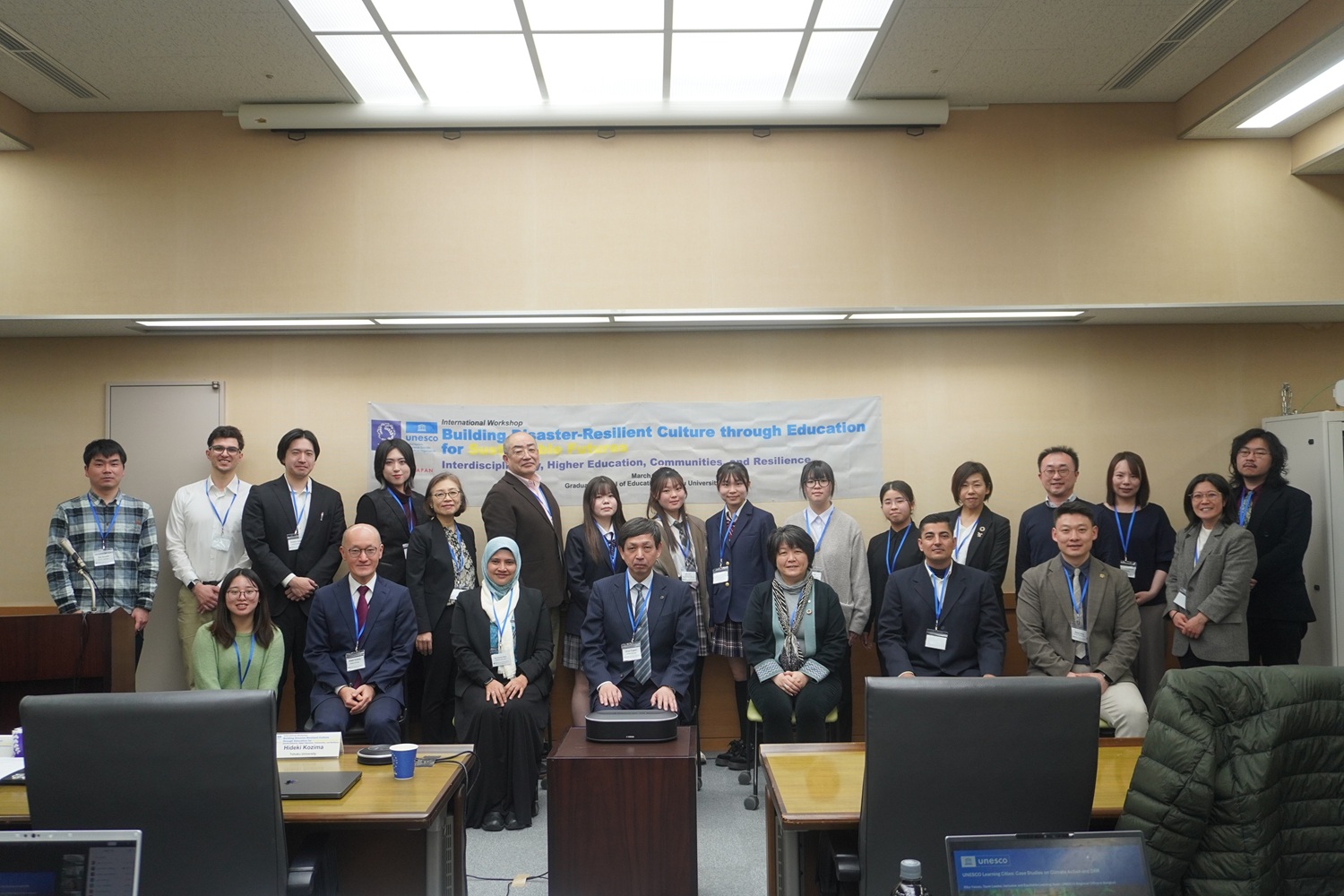
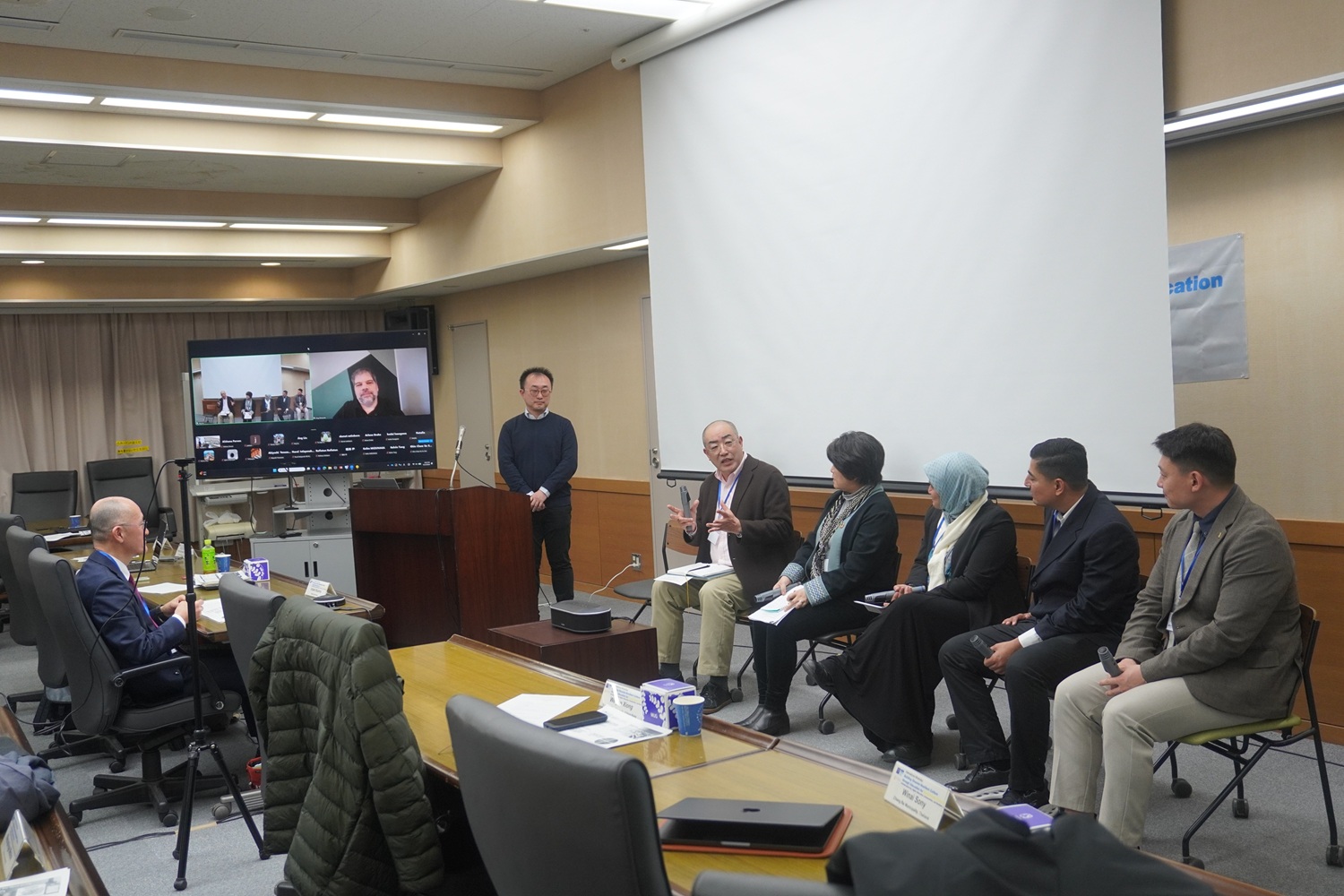
2026年3月12日、東北大学大学院教育学研究科は、「教育を通じた災害レジリエント文化の構築:持続可能な未来に向けた学際性・高等教育・地域社会・レジリエンス」と題する国際ワークショップを開催しました。本ワークショップは、ユネスコ・バンコク事務所および東北大学グリーンゴールズ・イニシアティブとの共催により実施され、日本とユネスコのパートナーシップ75周年を記念する特別イベントの一つとして開催されました。
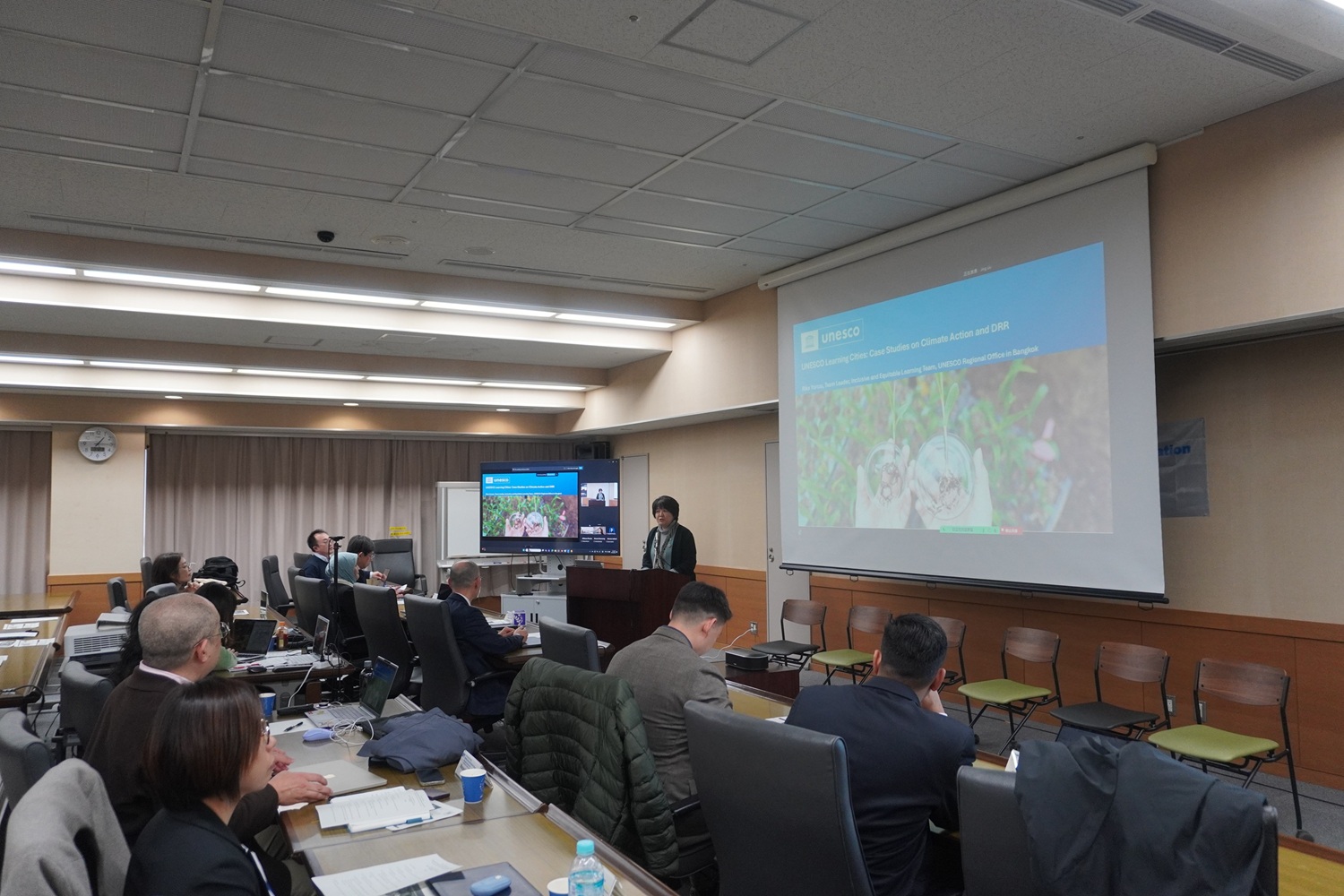
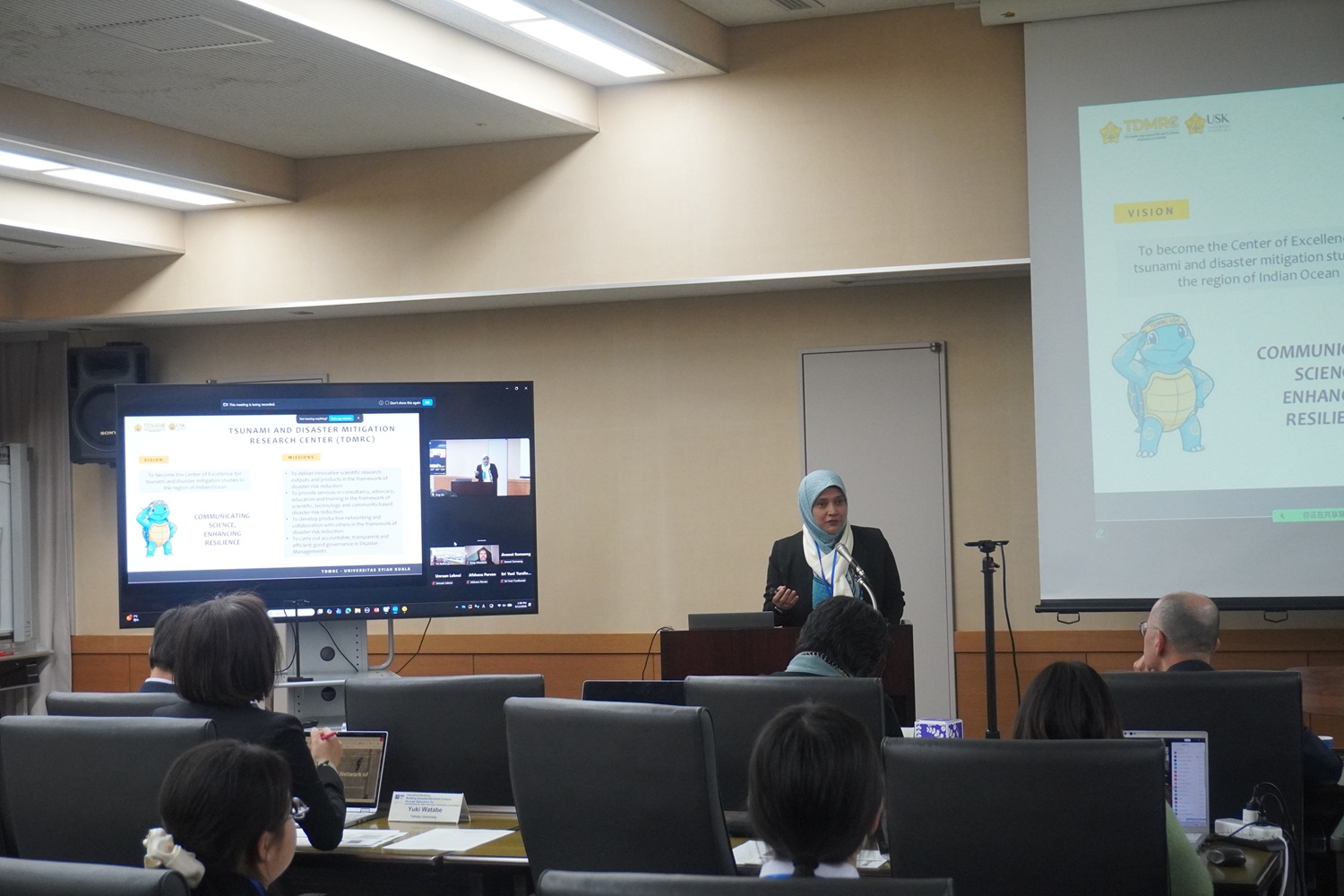
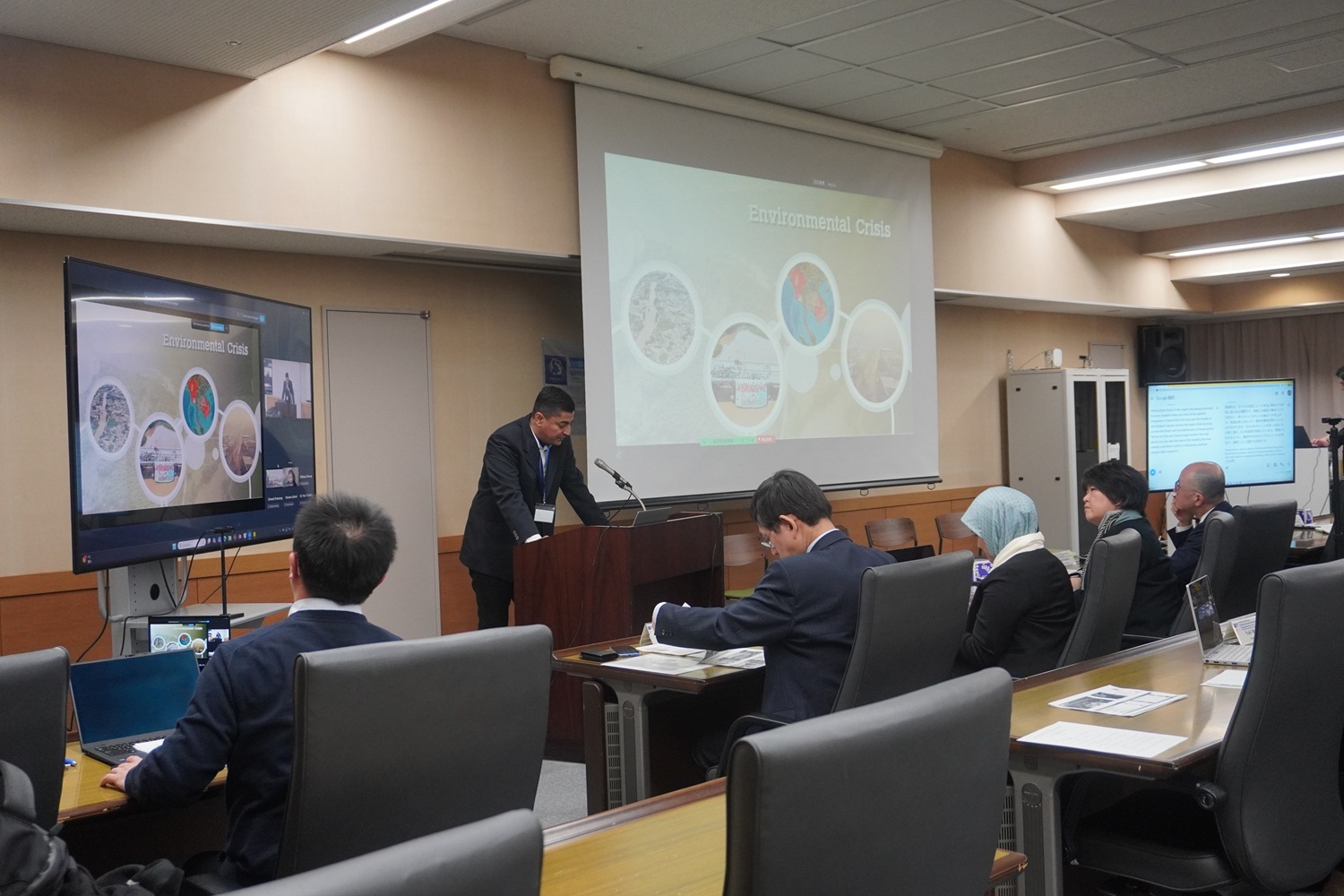
当日は、東北大学理事・副学長の湯上浩雄氏による開会挨拶の後、3件の基調講演が行われました。ユネスコ・バンコク事務所のRika Yorozu氏は、ユネスコの「学習都市(Learning City)」イニシアティブを紹介し、生涯学習を通じた気候変動対策や防災・減災の推進について講演しました。続いて、インドネシア・シャクアラ大学のDr. Rina Suryani Oktari氏が、大学全体で取り組むアプローチによる災害文化の推進と、レジリエントなコミュニティ構築におけるネットワークとパートナーシップの重要性について報告しました。また、タイ・チェンライ市長の代理としてWinai Sony氏が登壇し、ユネスコ学習都市の枠組みを活用したチェンライ市の取り組みを紹介しました。
さらに、宮城県宮城第一高等学校の生徒による探究型学習(PBL)の成果発表や、東北大学研究チームによる災害文化の概念化に関する研究報告も行われました。最終セッションでは、東北大学のGreg Misiaszek国際卓越教授がモデレーターを務め、高等教育の役割や大学が直面する課題について活発な議論が行われました。
ワークショップは、大学院教育学研究科長の小嶋英樹教授による閉会挨拶をもって終了しました。本ワークショップは、災害レジリエント文化に関する理解を深めるとともに、大学と地域社会の連携を通じたレジリエントな社会の構築について考える貴重な機会となりました。
On March 12, 2026, the Graduate School of Education at Tohoku University hosted an international workshop titled “Building Disaster-Resilient Culture through Education for Sustainable Futures: Interdisciplinarity, Higher Education, Communities, and Resilience.” The workshop was jointly organized with the UNESCO Bangkok Office and the Tohoku University Green Goals Initiative. It was also recognized as one of the special events celebrating the 75th anniversary of Japan’s partnership with UNESCO.
The workshop aimed to explore how disaster-resilient culture can be constructed, transmitted, and continuously renewed through education within learning cities, and how universities can serve as key anchors in fostering these processes.
The workshop began with opening remarks by Dr. Hiroo Yugami, Executive Vice President of Tohoku University, followed by three keynote speeches. In the first keynote address, Dr. Rika Yorozu from the UNESCO Bangkok Office introduced UNESCO’s Learning City Initiative and discussed its role in promoting climate action and disaster risk reduction through lifelong learning. In the second keynote speech, Dr. Rina Suryani Oktari from Universitas Syiah Kuala shared her experience in promoting disaster culture through a whole-institution approach, emphasizing the importance of strong networks and partnerships for building resilient communities. The third keynote speaker, Mr. Winai Sony, speaking on behalf of the Mayor of Chiang Rai Municipality in Thailand, presented Chiang Rai’s efforts to build disaster culture through the development of UNESCO Learning Cities.
During the coffee break, students from Miyagi Prefecture Miyagi First Senior High School presented their project-based learning (PBL) research on how to enhance the public impact of exhibitions at the Earthquake Disaster Memorial Museum. The students shared innovative ideas for improving the communication and dissemination of disaster-related knowledge and skills to broader audiences.
In the second session of the workshop, the research team from Tohoku University presented their preliminary findings on the conceptualization of disaster culture, as well as diverse evacuation practices observed in Higashimatsushima City, highlighting how local communities share and sustain disaster-related knowledge and experiences.
In the final session, Dr. Greg Misiaszek, distinguished professor from Tohoku University served as moderator and facilitated discussion among speakers and participants on the role of higher education and the challenges universities face in fostering disaster culture.
The workshop concluded with closing remarks by Dr. Hideki Kozima, Dean of the Graduate School of Education at Tohoku University.
Overall, the workshop provided a valuable opportunity for participants to share experiences and deepen their understanding of disaster-resilient culture. It also encouraged reflection on the critical role of higher education institutions in cultivating disaster-resilient societies through interdisciplinarity, collaboration, and community partnerships.